
how a 72-hour crime spree with cloned cards ended in capture
The case of Mark T. highlights the rapid downfall of a would-be fraudster. It illustrates how digital and physical evidence converged to secure a conviction in just 15 days.
Sections
- What is Carding and How Does it Work?
- What Vulnerabilities Did Mark Overlook?
- How Did Authorities Track Mark?
- What Are the Key Figures in This Case?
- Why Didn't Cryptocurrency Protect Mark?
- What Mistakes Did Mark Make?
- Lessons for Security Professionals
- The End of the Road for a Cybercriminal
- Common questions
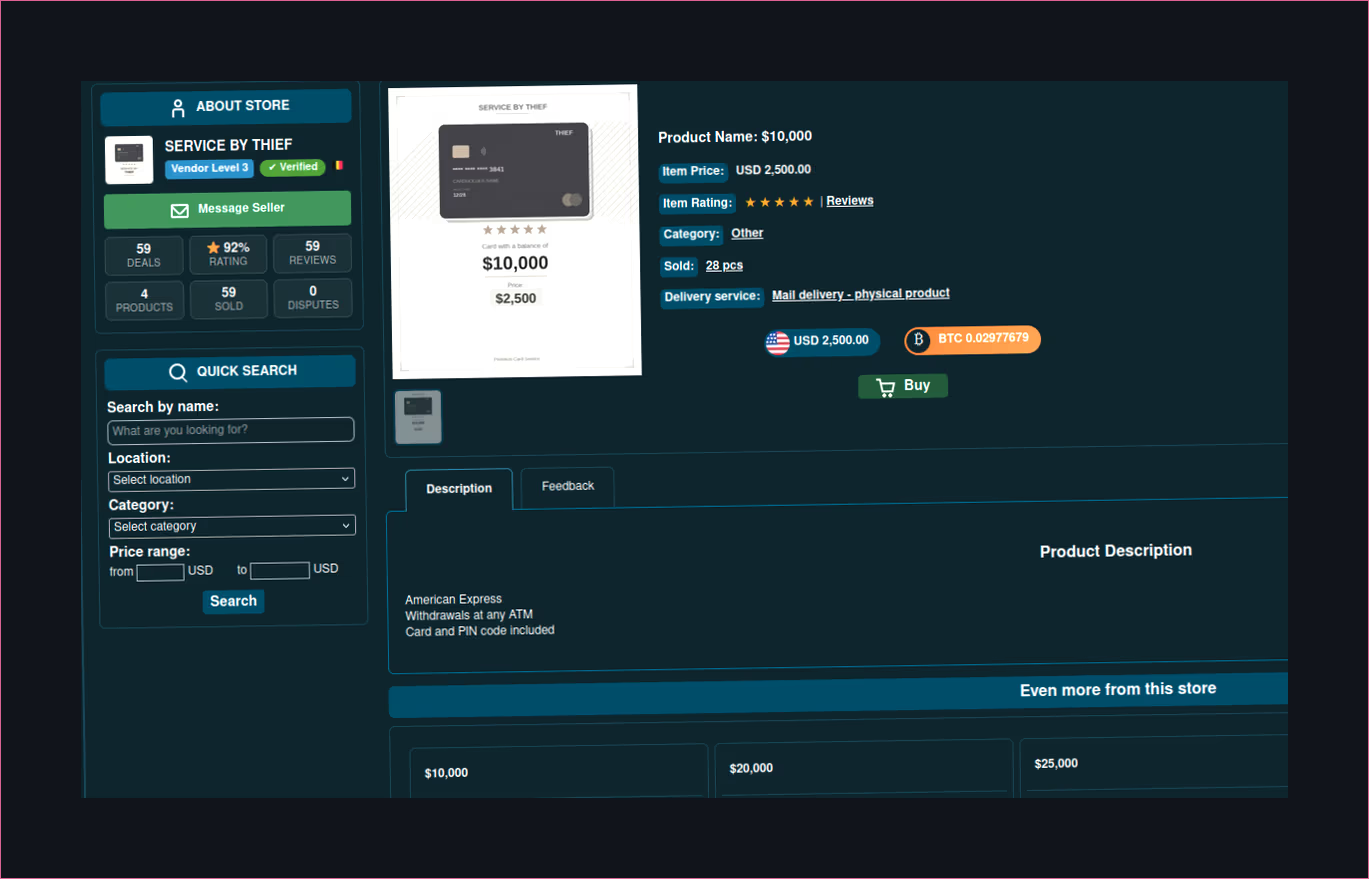
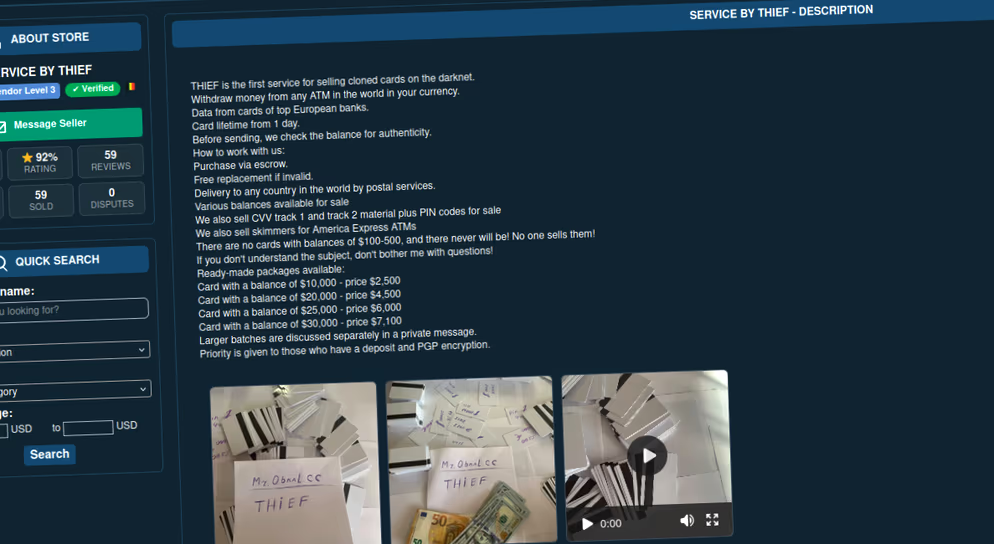
Interface of a darknet marketplace offering cloned cards.
In November 2024, Mark T., a 34-year-old from Tampa Bay, Florida, bought cloned debit cards from a darknet marketplace, hoping to exploit stolen banking data for quick profit. For $480 in cryptocurrency, he acquired six cards encoded with information from compromised accounts, leading to a series of withdrawals totalling $4,200 in just three attempts. However, his illicit gains turned out to be short-lived as the surveillance capabilities of modern ATMs ultimately led to his arrest within two weeks of his first transaction.
Quick summary
Digital and physical security systems effectively converge to identify criminals.
Cryptocurrency anonymity does not guarantee protection against law enforcement.
Customer education is vital in preventing financial fraud.
Rapid detection and reporting can mitigate losses from fraudulent activities.
Traditional banking safeguards are critical in combating modern cybercrime.
What is Carding and How Does it Work?
Carding involves the use of stolen banking information, a method that has persisted in the cybercrime landscape. Mark's operation exemplifies classic carding through a series of steps:
Skimming or Data Breach: Criminals gather stolen magnetic tracks using skimmers on ATMs, phishing, or purchasing data on darknet platforms.
Embossing: The stolen information is transferred onto blank card stock, mimicking legitimate cards with embossed names, expiry dates, and card numbers.
PIN Code Acquisition: If the victim's PIN has been captured via hidden devices, the buyer can access the funds directly.
Cash-out: Victims remain unaware while the buyer withdraws cash from ATMs.
Laundering: Cash is converted into cryptocurrency to obscure its origin.
In Mark's case, he procured his cards from an unnamed marketplace using Monero, known for its anonymity features. The cards were shipped in inconspicuous packaging, setting the stage for what he believed was a flawless crime.
What Vulnerabilities Did Mark Overlook?
Mark failed to consider several critical security features of ATMs that facilitated his identification. Contrary to common belief that the anonymity of the darknet extends to physical actions, ATMs function as surveillance devices equipped with advanced technology.
ATMs possess:
Built-in Cameras: Designed to capture the user's face at 1080p resolution, often with night vision capabilities.
Hidden Cameras: Many ATMs include secondary cameras positioned to capture additional angles of users.
Transaction Logs: Every transaction is meticulously documented down to the second, capturing details like time, amount, card number, and ATM ID.
Geolocation: The ATM's coordinates are transmitted to banking logs, providing location data.
Network Logs: Communications with the bank's processor include metadata that can trace transactions back to the user.
During Mark's final withdrawal, the ATM's camera recorded his face in sharp detail. His lack of disguise, such as a mask or glasses, simplified the identification process. The recorded footage lasted just 23 seconds but was enough to link him to the crime, demonstrating how physical evidence can easily undermine digital anonymity.
Close-up of an ATM camera crucial for identifying users.
How Did Authorities Track Mark?
The investigation unfolded swiftly over a brief timeline, highlighting the efficiency of bank fraud detection systems:
Day 1: Multiple victims across Florida, Georgia, and North Carolina noticed unauthorized withdrawals and contacted their banks, prompting immediate card blocks and escalation of the issue to fraud detection systems.
Day 3: Banks’ anti-fraud algorithms detected a pattern of withdrawals linked to cloned cards, flagging the case for further investigation.
Day 5: The case transitioned to the U.S. Secret Service, which began requesting ATM logs and video evidence.
Day 8: Footage from the ATM where Mark made his fourth withdrawal revealed a clear image of his face. Cross-referencing with the Florida driving license database confirmed his identity.
Day 12: Investigators obtained a warrant to access Mark's electronic records, including browsing history and cryptocurrency activities. Notably, he had visited Tor exit nodes during key periods, linking him to the purchase of Monero used to buy the cloned cards.
Day 14: A search warrant was executed at Mark's residence, resulting in the seizure of items such as blank cards, a magnetic stripe reader, a laptop with evidence of darknet activity, and cash that matched recent ATM withdrawals.
Day 15: Mark was arrested and ultimately confessed to his actions, revealing the cracks in his carefully devised plan that had crumbled under the weight of the evidence collected.
What Are the Key Figures in This Case?
The financial and legal consequences of Mark's conduct are summarized below:
| Fed. Prison Term | Oversight Period | Cashouts | Sum Extracted | Card Cost | Fines & Restitution | Days to Arrest |
|---|---|---|---|---|---|---|
| 5 years (60 months) | 3 years | 4 | $4,900 | $480 | $22,000 | 15 |
These numbers highlight both the scale of his illicit gains and the legal consequences that followed, emphasising that the allure of quick money in cybercrime often leads to severe repercussions.
Mark purchased the cloned cards from a darknet marketplace that remains unnamed.
Why Didn't Cryptocurrency Protect Mark?
Despite using Monero, a cryptocurrency designed for privacy, Mark's chain of transactions ultimately revealed his identity due to several critical oversights. The investigation uncovered the following vulnerabilities:
KYC Verification: Mark purchased Monero via a centralized exchange requiring Know Your Customer (KYC) compliance, linking his identity and transaction details to his purchases. Under legal orders, the exchange disclosed his information, which became crucial evidence.
Timing and Coordination: The purchase of Monero, the subsequent transaction on the darknet, and the ATM withdrawals occurred within a tight timeframe, creating a circumstantial case against him.
Physical Evidence: The seized cards contained magnetic tracks directly corresponding to real victims, serving as irrefutable evidence that transcended digital anonymity.
Video Surveillance: The footage capturing Mark's face at the ATM provided a direct link to his actions that could not be obscured by cryptocurrency's anonymity features.
This case exemplifies that even cryptocurrencies marketed for their privacy do not guarantee invulnerability when key elements of identification are neglected.
What Mistakes Did Mark Make?
Mark's downfall can be attributed to a series of critical mistakes that any potential fraudster should consider. These missteps include:
Geographic Concentration of Withdrawals: All transactions occurred within a narrow radius of 40 miles from his home, which immediately raised alarms in anti-fraud systems.
Lack of Disguise: The absence of any effort to hide his identity, such as wearing a mask or glasses, made it trivial for investigators to identify him through video footage.
Centralised Exchange Use for Cryptocurrency: Mark’s use of a non-anonymous platform to purchase Monero tied him directly to his illegal activity, negating the alleged anonymity of his financial operations.
Retention of Evidence at Home: The presence of blank cards, a skimming device, and his laptop at his home provided law enforcement with direct proof of his involvement in the crime.
Cash on Hand: The cash seized during the investigation coincided with the amounts withdrawn at ATMs, further solidifying the circumstantial evidence against him.
Rapid Withdrawal Pattern: The speed of his actions, with all withdrawals completed within a fortnight, allowed for quick detection by fraud systems but would have been less suspicious if spread over an extended period.
Lessons for Security Professionals
Mark's experience provides valuable insights into the functioning of security systems and the vulnerabilities that exist for cybercriminals:
Importance of Anti-Fraud Systems: Banks' fraud detection systems acted as the first line of defence, detecting patterns that individuals often underestimate. Continuous investment in machine learning models for anomaly detection can enhance this defence.
Integration of Forensic Evidence: The collaboration between physical and digital forensics was crucial to the investigation. The ATM footage needed contextual data from transaction logs for meaningful analysis, underscoring the need for a holistic approach to crime-solving.
Cryptocurrency Limitations: Even cryptocurrencies labelled as anonymous can lead to identification through KYC processes. This highlights the ongoing challenge of anonymity in the digital age, especially when physical transactions are involved.
Customer Education Needs: Victims’ delayed recognition of fraud contributed to the severity of losses. Prompt reporting is essential, and educational initiatives by banks can significantly lower the overall impact of fraud.
The End of the Road for a Cybercriminal
The case of Mark T. serves as a cautionary tale, illustrating the pitfalls of underestimating surveillance and fraud detection systems. Despite his intention to exploit stolen banking information anonymously, the convergence of digital and physical evidence led to his conviction in a remarkably short timeframe. This example underscores the importance of continuous improvements in anti-fraud technologies, customer education, and the necessity for criminals to acknowledge the risks associated with their actions.
Common questions
How can one tell if an ATM has a skimmer?
It is advisable to visually inspect the card slot for any unusual attachments or modifications, and to check for any hidden cameras or devices.
What should someone do if they suspect fraud on their bank account?
Immediate reporting to the bank is crucial to block the card and prevent further unauthorized transactions. It is also advisable to monitor accounts closely for unusual activity.
What are carding forums on the dark web?
Carding forums are online platforms where cybercriminals buy, sell, and discuss stolen credit card information, techniques, and related services.
Can the anonymity of cryptocurrencies protect against identification in cybercrime?
While cryptocurrencies like Monero are designed for privacy, identification can still occur through KYC processes and transaction tracing, especially when linked to physical actions.
Further services. A few related services may help with the next step. Service directory